
Augustus Leopold Egg Prints – Travel, Interiors & Narrative Contrast
Augustus Leopold Egg prints use rooms, clothing and nearby objects to shape a narrative. A shared carriage can frame two different activities, while sumptuous and bare interiors create a much larger contrast. Explore these scenes alongside figurative art, academic prints and James Tissot’s furnished settings.
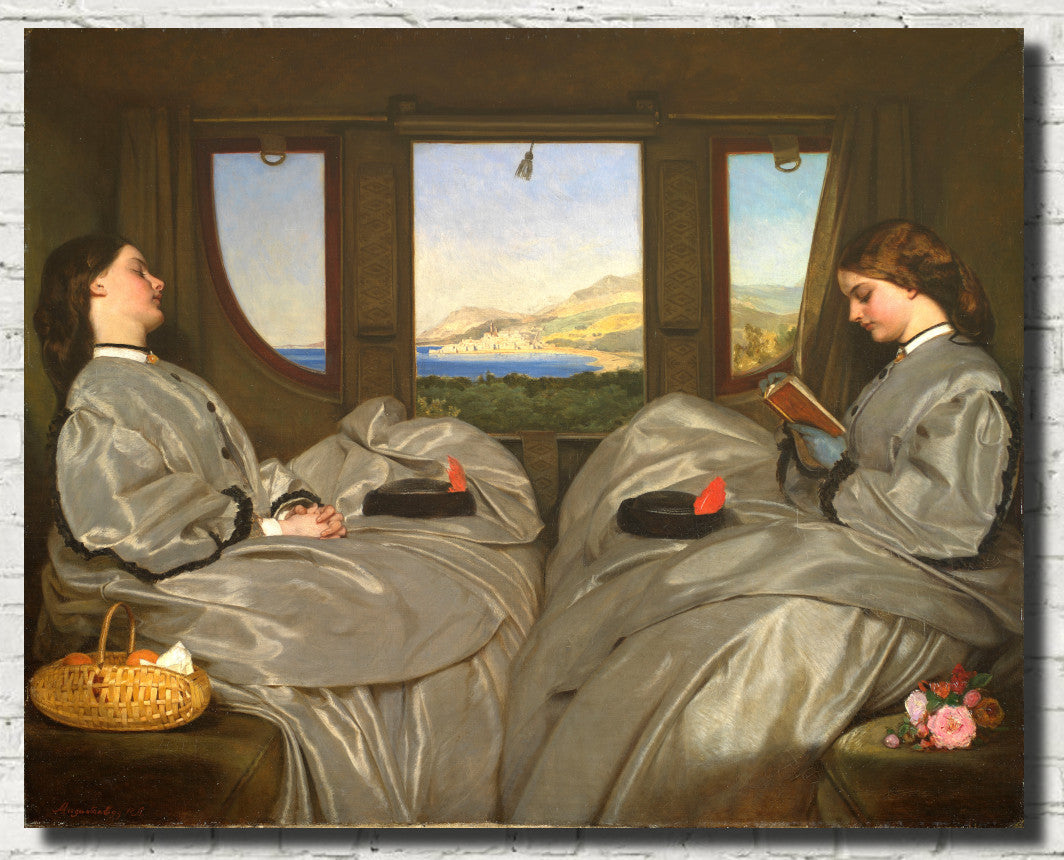
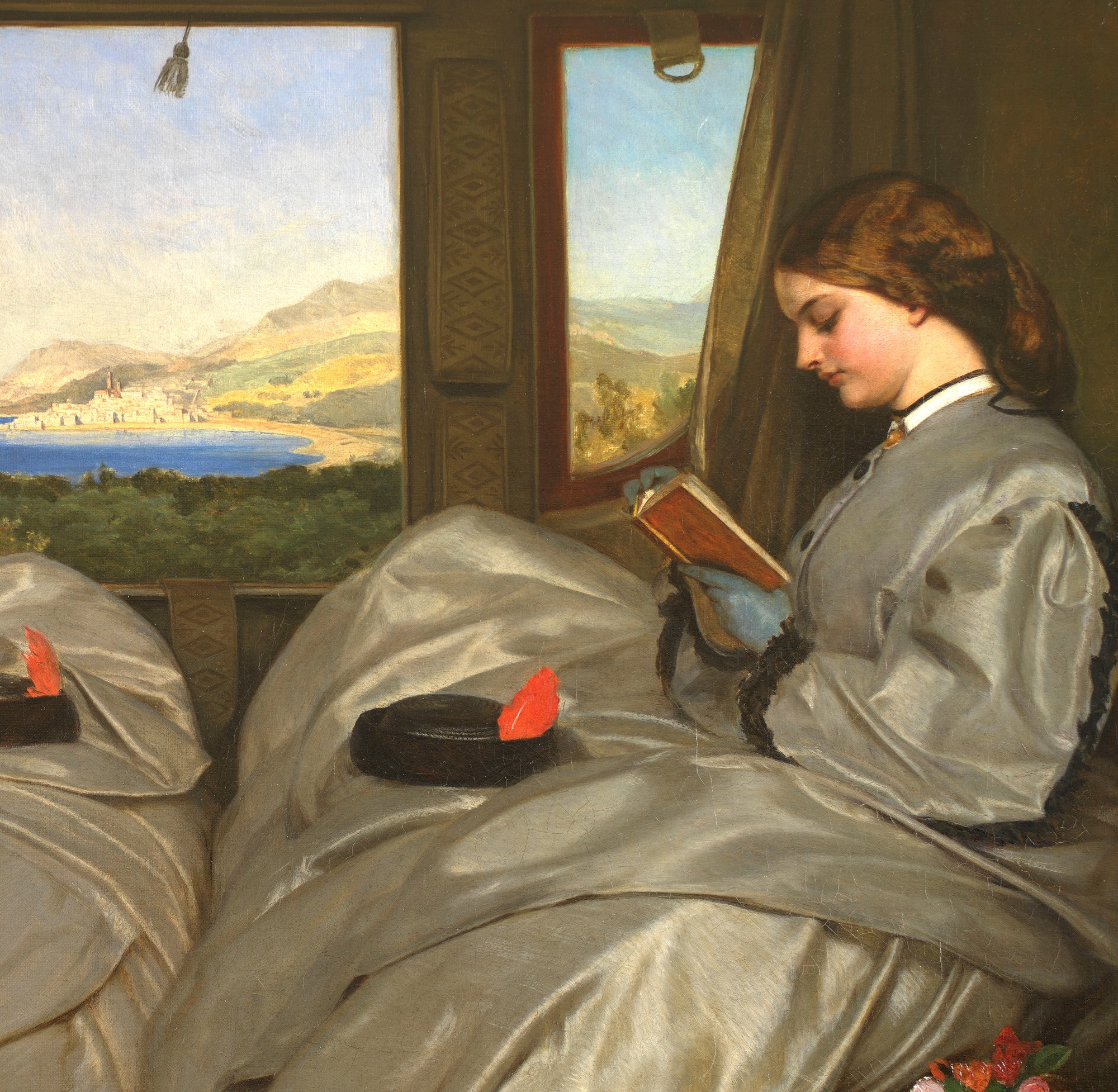
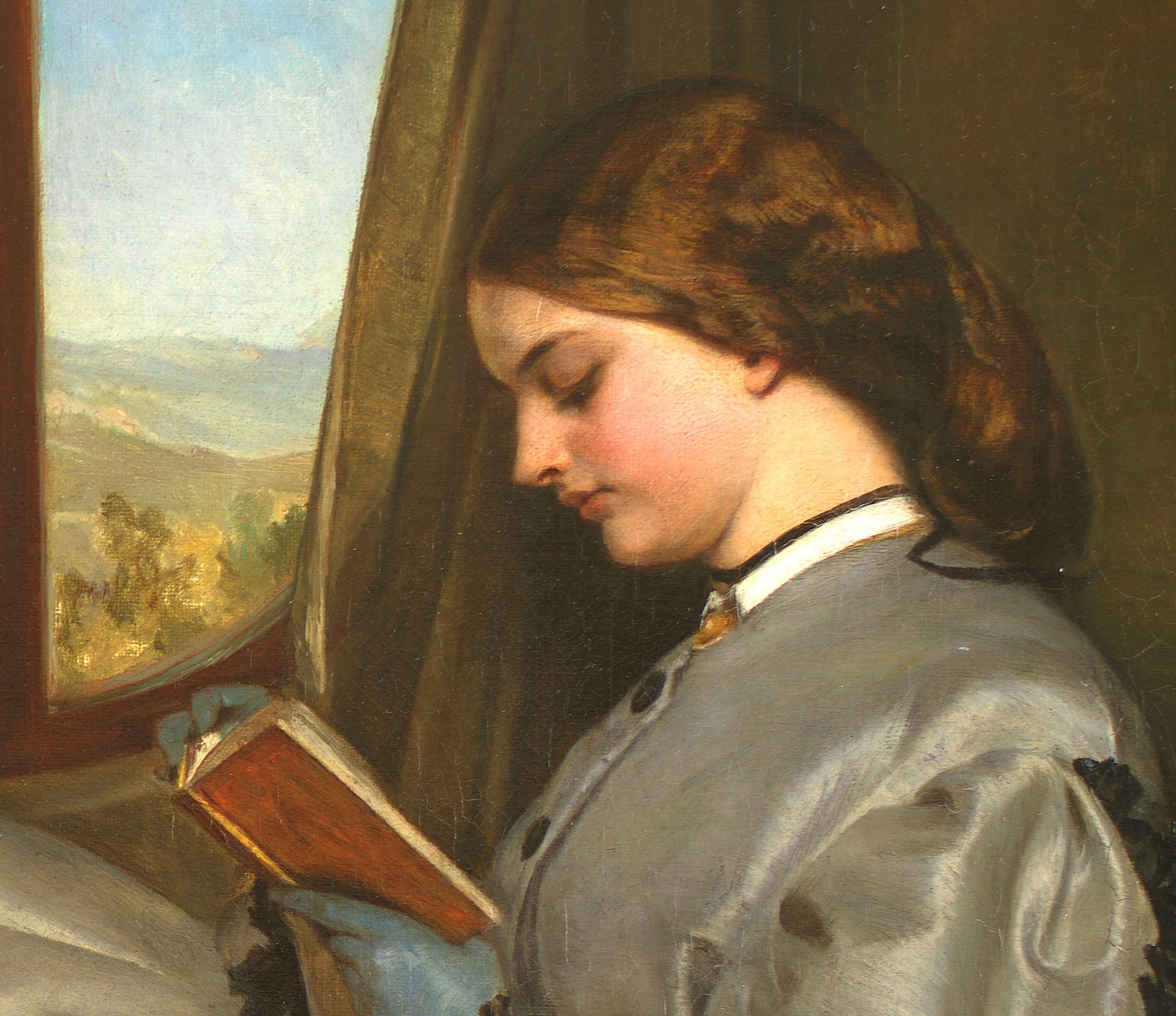
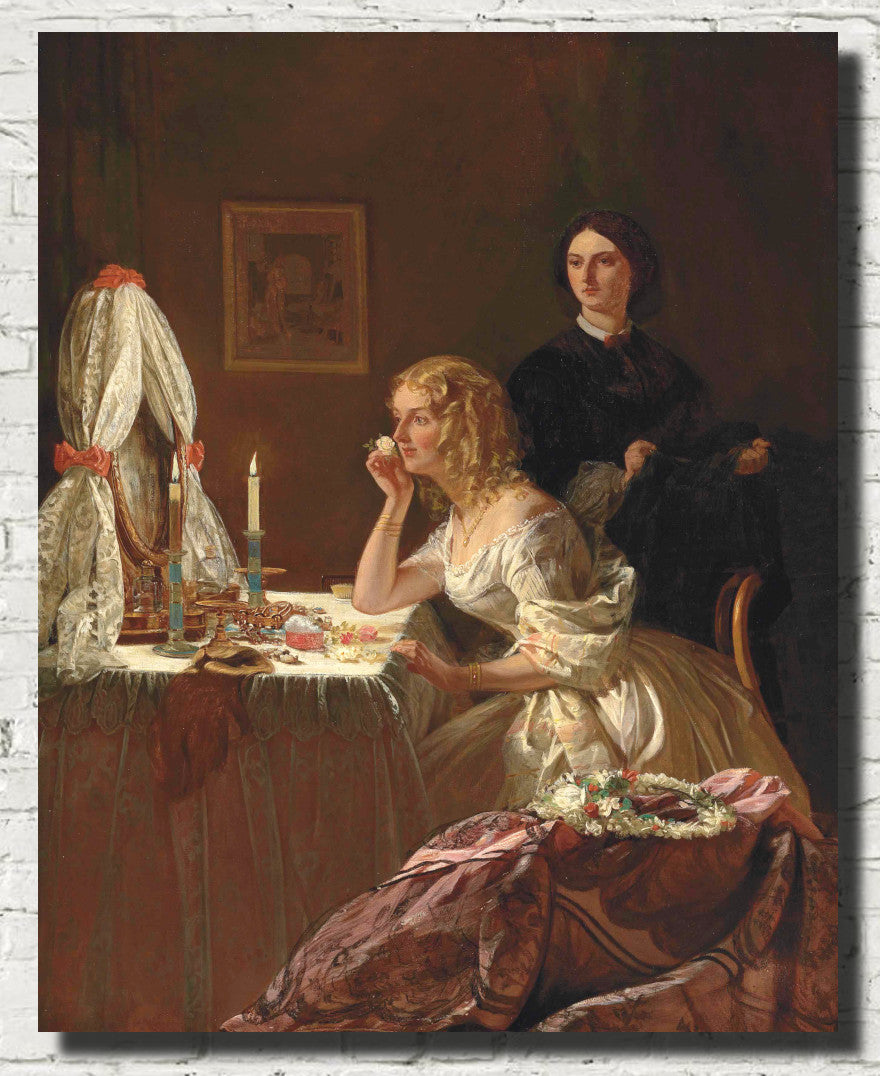
Two figures within the carriage windows
The Travelling Companions places the similarly dressed women opposite one another, one resting while the other reads. Their broad grey skirts spread across the seats, with baskets and small possessions nearby. The open view through the centre supplies a distant landscape beyond the enclosed, carefully balanced interior.
A gathering within an ornamented room
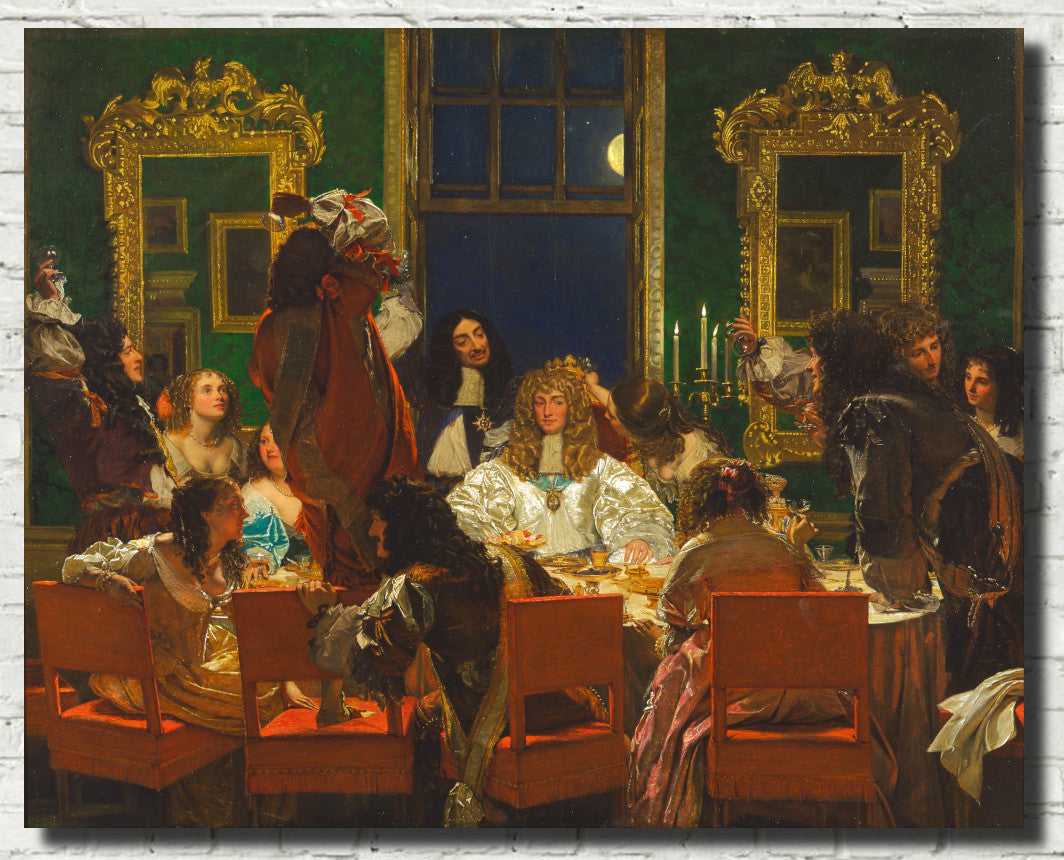
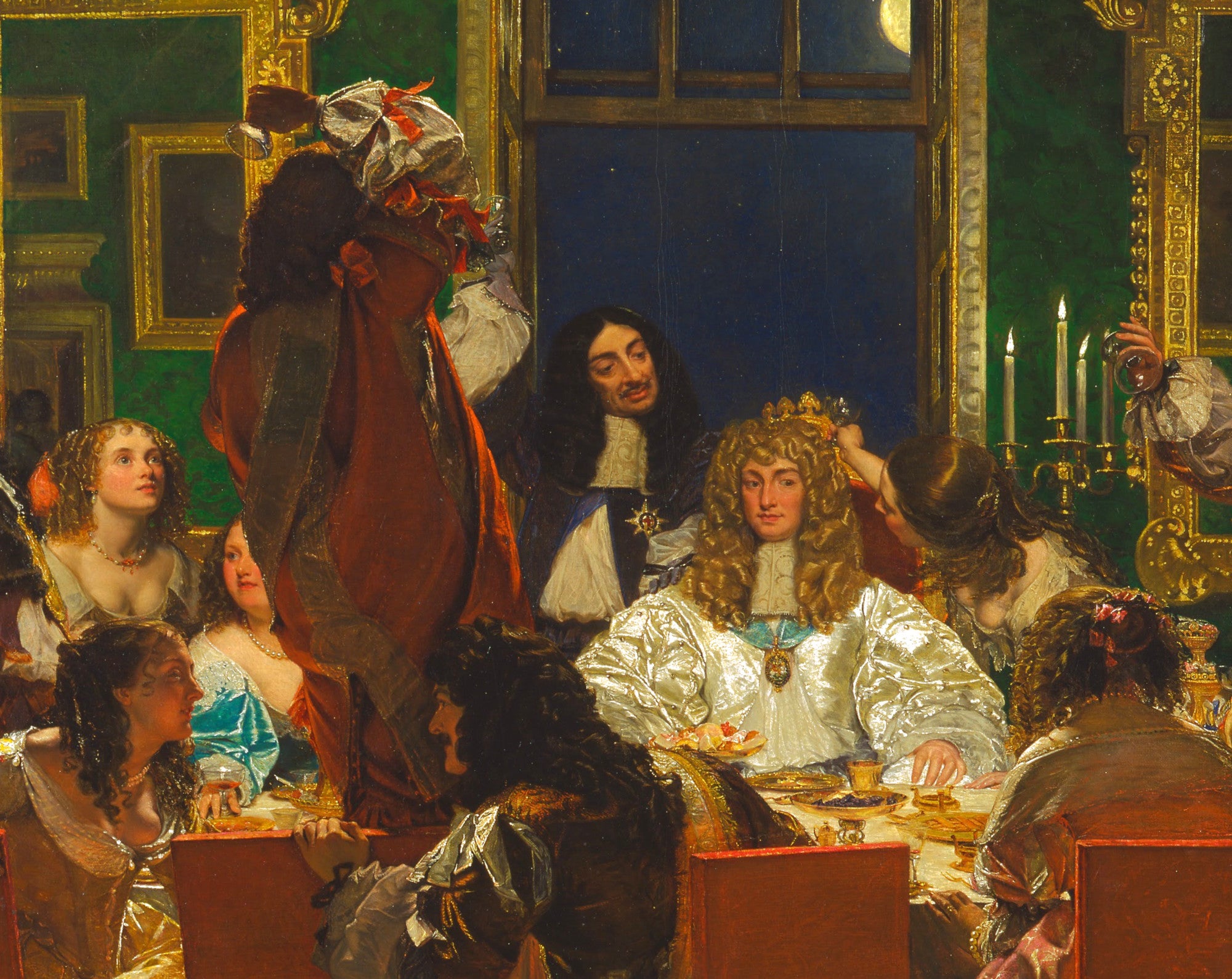
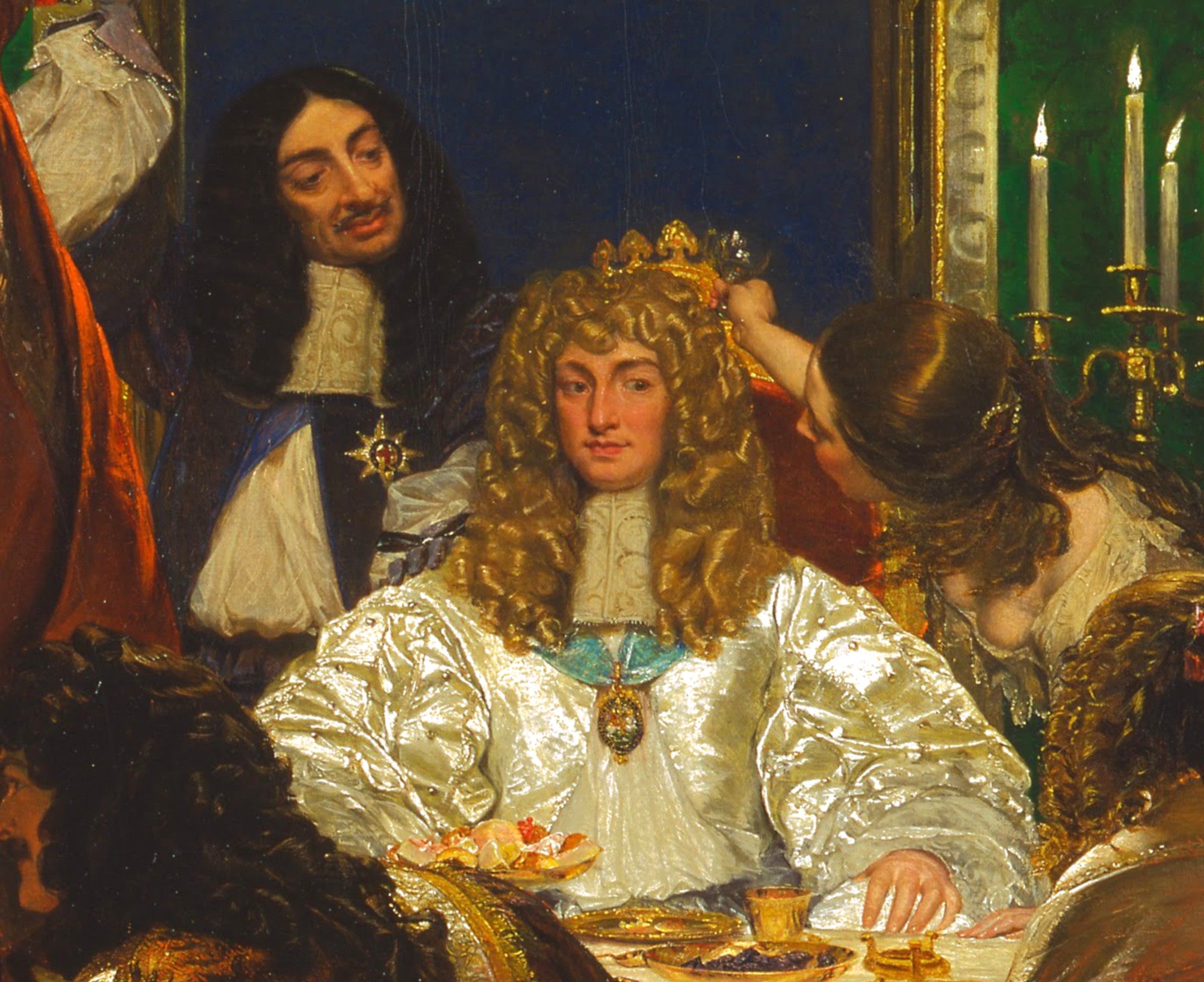
The Life of Buckingham fills the space around the table with figures, bright fabrics and gilded furnishings. Large mirrors and wall decoration give the setting an elaborate frame. The clustered faces and gestures distribute attention across the gathering, making social activity inseparable from the richly furnished room.
A reclining figure in a bare chamber
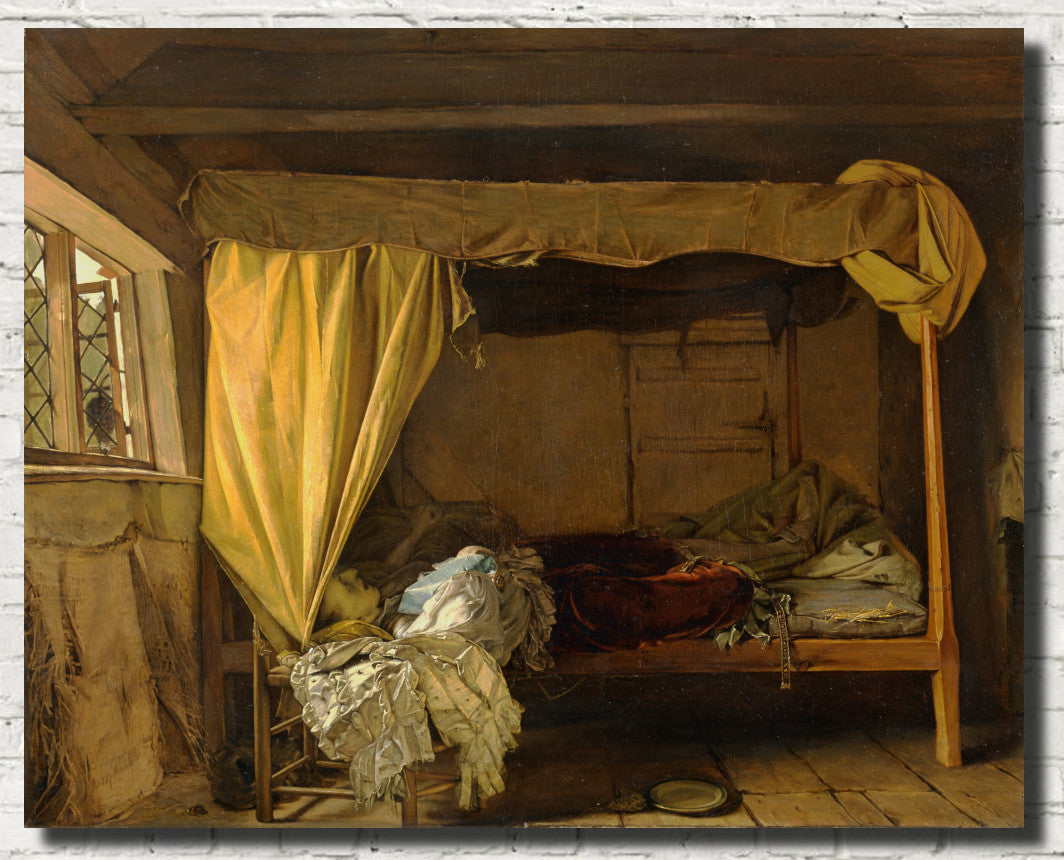
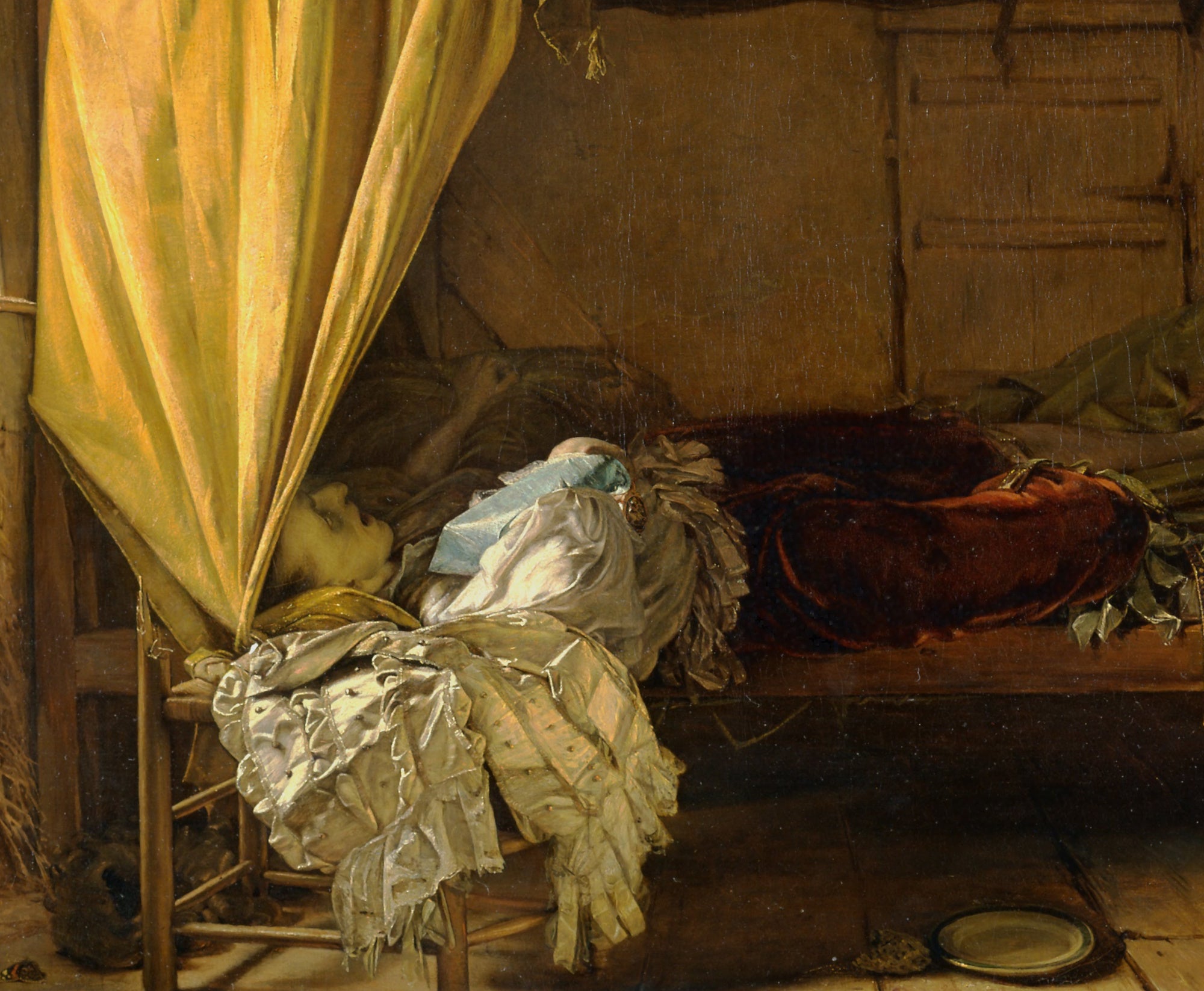
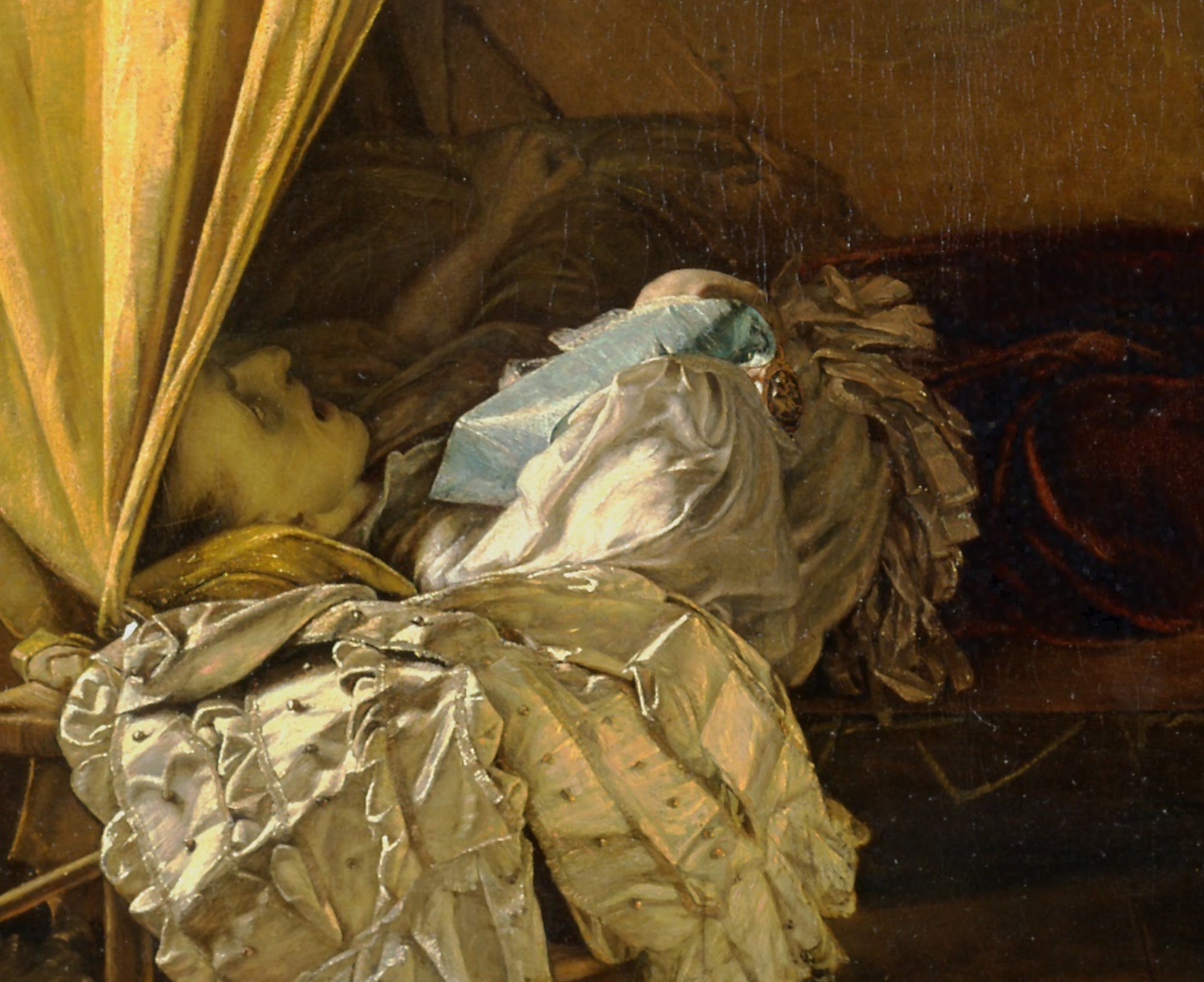
The Death of Buckingham sets the bed beneath yellow curtains within rough timber walls. Light enters beside the bed, revealing scattered fabric and the plain floor. The sparse furnishings and deep enclosed space provide a sharp visual counterpoint to the crowded, decorative setting of The Life of Buckingham.
Related artists and collections
Compare narrative interiors in James Tissot, social observation in William Hogarth and historical encounters in Edmund Blair Leighton. Further figure painting follows the separate gestures, while academic art develops the staged scenes and their descriptive objects.
Read more in our Edmund Blair Leighton guide to narrative figure painting.